
Day and Night Skincare Routine for Oily Skin: The Complete Science-Based Guide to Balance Sebum, Prevent Breakouts, and Build Healthy Skin

The Best Oily Skin Routine Is About Balance, Not Removing Oil
Finding the right day and night skincare routine for oily skin can feel overwhelming. Many people try to remove all oil from their skin, but modern skincare science shows that balanced, healthy skin requires proper cleansing, hydration, and targeted ingredients . Oily skin is one of the most common skin concerns worldwide, yet it is often misunderstood. Many people believe that the only solution for oily skin is to remove oil completely through strong cleansers, harsh exfoliation, or drying products.
However, modern skincare science shows that this approach can create more problems than solutions.
Healthy skin is not oil-free skin.
Sebum, the natural oil produced by sebaceous glands, plays an essential role in maintaining skin health. It helps protect the skin surface, reduce moisture loss, maintain flexibility, and support the skin’s natural protective functions.
The real goal of an effective day and night skincare routine for oily skin is not to eliminate sebum. The goal is to create balance.
A scientifically designed oily skin routine should help:
- regulate excessive sebum production,
- maintain a strong skin barrier,
- reduce pore congestion,
- minimize breakouts,
- improve skin texture,
- protect the skin from environmental damage.
The best skincare routine is not necessarily the one with the most products. It is the one that uses the right ingredients at the right time.
This complete guide explains the science behind oily skin and provides a professional morning and nighttime skincare routine using evidence-based ingredients such as niacinamide, salicylic acid, retinoids, azelaic acid, ceramides, and hydrating agents.
Understanding Oily Skin: Why Does Skin Produce Excess Oil?
To build an effective skincare routine, it is important to understand the biology behind oily skin.
Oily skin occurs when sebaceous glands produce an increased amount of sebum. These glands are located underneath the skin and are especially active in areas known as the “T-zone”:
- forehead,
- nose,
- chin.
Sebum is a mixture of different lipids, including:
- triglycerides,
- fatty acids,
- wax esters,
- squalene,
- cholesterol.
These natural oils are necessary for healthy skin. They help maintain softness, flexibility, and protection.
The problem occurs when excessive sebum combines with:
- dead skin cell buildup,
- environmental pollutants,
- inflammation,
- unsuitable skincare products.
This can contribute to common oily skin concerns:
- visible shine,
- enlarged-looking pores,
- blackheads,
- whiteheads,
- uneven texture,
- acne-prone skin.
What Causes Oily Skin?
1. Genetics: Your Natural Skin Type
Genetics is one of the strongest factors influencing oily skin.
Some individuals naturally have:
- more active sebaceous glands,
- higher sebum production,
- oilier skin throughout life.
This explains why some people experience oily skin despite following a consistent skincare routine.
2. Hormonal Influence
Hormones play a major role in regulating sebum production.
Androgens, including testosterone-related hormones, stimulate sebaceous glands and can increase oil production.
This is why oily skin is often associated with:
- puberty,
- hormonal fluctuations,
- certain life stages.
3. Climate and Environment
Environmental conditions can strongly affect oily skin.
Hot and humid weather can increase:
- sweating,
- oil distribution,
- facial shine.
Pollution may also contribute by increasing oxidative stress and affecting overall skin quality.
4. Skincare Habits
Sometimes oily skin becomes harder to manage because of an inappropriate routine.
Common mistakes include:
- washing the face too frequently,
- using aggressive cleansers,
- over-exfoliating,
- applying too many active ingredients at once.
These habits can weaken the skin barrier and create a cycle of irritation and imbalance.
Oily Skin vs Dehydrated Skin: Can Oily Skin Lack Water?

One of the most important concepts in modern skincare is understanding that oily skin can also be dehydrated.
Oil and water are controlled by different mechanisms.
Oily Skin
Means:
The skin produces too much sebum.
Dehydrated Skin
Means:
The skin lacks sufficient water.
A person can experience both at the same time.
Signs of dehydrated oily skin include:
- excessive shine with tightness,
- rough skin texture,
- increased sensitivity,
- dull appearance,
- makeup that does not apply smoothly.
This is why simply using stronger oil-control products is not always the best solution.
A balanced routine must address both:
- excess oil,
- skin hydration.
The Skin Barrier: The Foundation of Oily Skin Health
The skin barrier is the outer protective layer of the skin, mainly located in the stratum corneum.
Its main functions are:
- preventing excessive water loss,
- protecting against external stressors,
- maintaining skin comfort,
- supporting healthy skin function.
A healthy skin barrier depends on important components such as:
- ceramides,
- cholesterol,
- fatty acids,
- natural moisturizing factors.
When the barrier is damaged, the skin may become:
- irritated,
- sensitive,
- dehydrated,
- more difficult to control.
This is why aggressive oil-removing routines often fail.
The goal is not to fight your skin.
The goal is to restore balance.
The Three Principles of a Science-Based Oily Skin Routine
Principle 1: Clean Without Over-Stripping
A cleanser should remove:
- excess sebum,
- sunscreen,
- pollution,
- impurities.
However, it should not remove all protective lipids from the skin.
A good cleanser leaves the skin feeling:
- fresh,
- comfortable,
- balanced.
A tight feeling after cleansing may indicate that the product is too harsh.
Principle 2: Choose Targeted Ingredients
Oily skin does not need dozens of products.
A strategic routine uses ingredients with specific functions:
Niacinamide
Supports:
- oil balance,
- skin barrier function,
- smoother appearance.
Salicylic Acid
Supports:
- pore cleansing,
- reduction of congestion.
Retinoids
Support:
- skin renewal,
- texture improvement
Ceramides
Support:
- barrier repair.
Principle 3: Protect Skin Every Day
Sun protection is essential for every skin type.
UV exposure contributes to:
- premature aging,
- inflammation,
- uneven pigmentation,
- reduced skin resilience.
A complete oily skin routine always includes sunscreen.
Why This Oily Skin Routine Is Different
Many skincare routines focus only on reducing shine.
A professional skincare approach focuses on skin biology.
The goal is to create healthier skin by balancing:
- sebum production,
- hydration,
- barrier function,
- inflammation,
- environmental protection.
The best oily skin routine is not the most aggressive one.
It is the one that supports the skin’s natural ability to regulate itself.
Morning Skincare Routine for Oily Skin (AM): A Science-Based Step-by-Step Guide
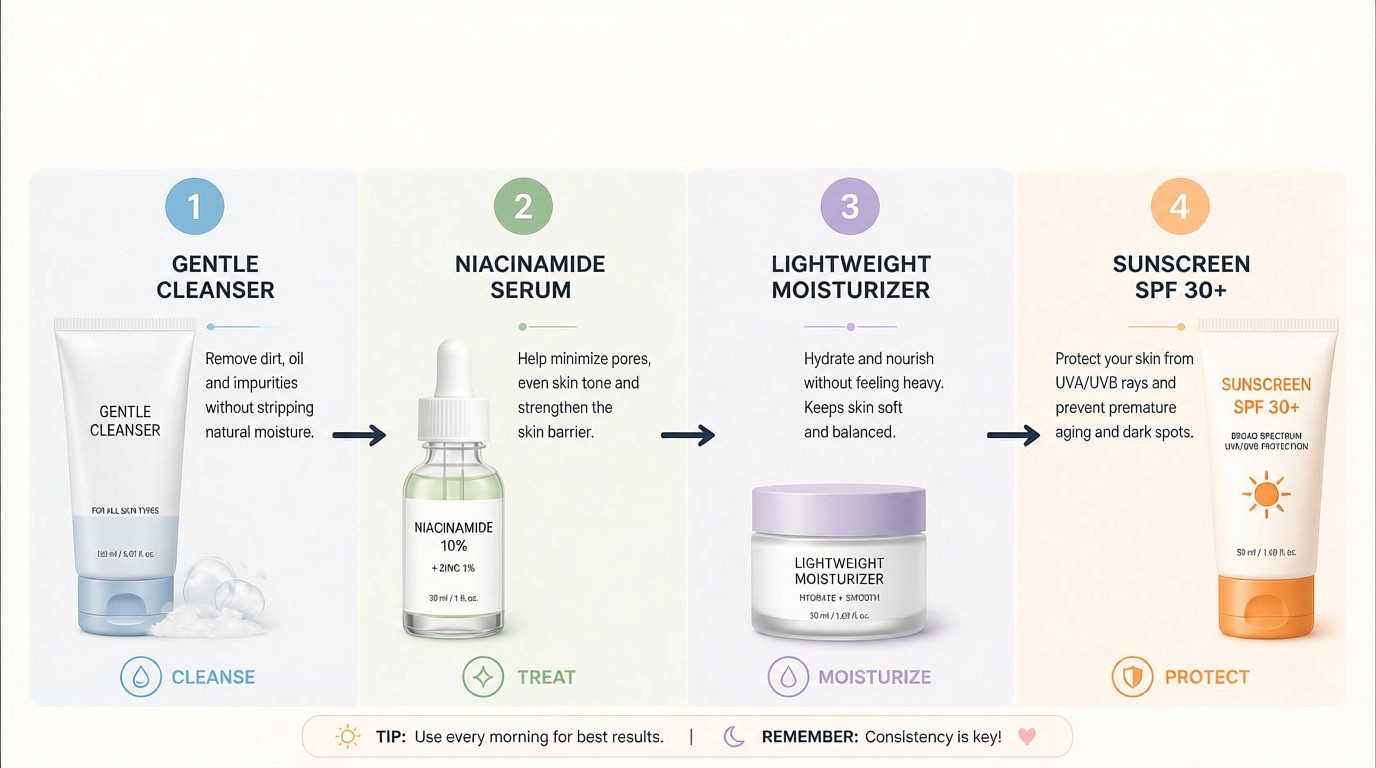
A successful morning skincare routine for oily skin should focus on three main objectives:
- controlling excess sebum,
- maintaining hydration and barrier health,
- protecting the skin from environmental damage.
Many people with oily skin make the mistake of using aggressive products in the morning to remove all oil. However, the goal is not to completely eliminate sebum. A healthy amount of natural oil is necessary for maintaining balanced and resilient skin.
The ideal morning routine for oily skin should be lightweight, effective, and based on ingredients that support normal skin function.
Why a Skincare Routine for Oily Skin Should Include a Gentle Cleanser
The first step of a morning skincare routine for oily skin is cleansing. During the night, the skin naturally produces sebum and sweat while also accumulating environmental particles. Consequently, a gentle cleanse can help refresh the skin and prepare it for treatment products.
Why Does Oily Skin Need a Morning Cleanse?
A morning cleanser helps remove:
- excess sebum,
- sweat,
- dead skin cells,
- overnight residue.
As a result, skincare products applied afterward may spread more evenly and feel more comfortable on the skin.
Why Over-Cleansing Can Make Oily Skin Worse
Many people believe that a stronger cleanser will reduce oil production. However, aggressive cleansing can remove important lipids from the skin barrier.
As a result, the skin may become:
- dry,
- irritated,
- uncomfortable,
- dehydrated.
In some cases, the skin may look both oily and dehydrated at the same time.
Signs That Your Cleanser Is Too Harsh
our cleanser may be too aggressive if your skin feels:
- tight,
- itchy,
- irritated,
- uncomfortable immediately after washing.
Ideally, the skin should feel refreshed rather than stripped.
Ingredients to Look for in a Gentle Cleanser
Beneficial ingredients include:
Glycerin
Helps attract water and support hydration.
Niacinamide
Supports the skin barrier and contributes to overall skin balance.To learn more about its benefits, concentrations, and how to use it correctly, read our complete guide to niacinamide.
Zinc PCA
Frequently used in products formulated for oily and combination skin.
How Often Should Oily Skin Cleanse?
For most people, cleansing once in the morning is sufficient. However, very oily skin or humid environments may require a gentle morning cleanse every day.
The correct approach depends on how your skin feels.
The Best Serum in a Skincare Routine for Oily Skin
After cleansing, the next step is applying a treatment serum. Unlike moisturizers, serums are designed to deliver concentrated ingredients that target specific concerns.
Why Are Serums Important for Oily Skin?
A good serum can help support:
- skin balance,
- hydration,
- overall appearance,
- barrier function.
Furthermore, lightweight serums are usually well suited to oily skin because they do not add a heavy feeling.
Niacinamide: A Multi-Benefit Ingredient for Oily Skin
Niacinamide, also known as vitamin B3, is one of the most researched skincare ingredients.
Supports Sebum Balance
Niacinamide is often used in products designed to improve the appearance of excess oil and shine.
Supports the Skin Barrier
In addition, niacinamide supports components involved in healthy barrier function.
Improves Skin Texture
Moreover, it can improve the appearance of:
- visible pores,
- uneven texture,
- overall skin quality.
Can Vitamin C Benefit Oily Skin?
Although vitamin C is not an oil-control ingredient, it offers antioxidant support.
For example, environmental factors such as pollution and UV exposure may contribute to oxidative stress. Therefore, adding a lightweight vitamin C serum can help support brighter and healthier-looking skin.
Is Zinc PCA Worth Adding to an Oily Skin Routine?
Yes. Zinc PCA is commonly used in formulations designed for oily skin because it supports balanced skin appearance without creating excessive dryness.
Why Moisturizer Matters in a Skincare Routine for Oily Skin
One of the biggest misconceptions about oily skin is that moisturizer is unnecessary.
However, oily skin still needs hydration.
Why Hydration Is Essential for Oily Skin
Oil and water are different aspects of skin function.
Consequently, a person can have oily skin and still experience dehydration.
Proper hydration helps support:
- skin comfort,
- barrier function,
- overall skin appearance.
How to Choose the Right Moisturizer
Look for products that are:
- lightweight,
- non-comedogenic,
- oil-free,
- fast absorbing.
Gel creams and lightweight emulsions are often preferred by people with oily skin.
Ingredients That Support Hydration Without Feeling Heavy
Hyaluronic Acid
Helps attract water to the skin.
Ceramides
Support barrier integrity and skin protection.
Panthenol
Provides soothing hydration.
Glycerin
Supports moisture retention.
Why Sunscreen Is Essential in a Skincare Routine for Oily Skin
A complete morning skincare routine for oily skin is not finished without sunscreen.
Many people avoid sunscreen because they worry about greasy textures. However, modern formulations are available in lightweight and matte finishes. Daily sunscreen use is widely recommended by dermatologists and professional organizations, American Academy of Dermatology
Why Daily Sun Protection Matters
UV exposure contributes to:
- premature aging,
- inflammation,
- uneven pigmentation,
- reduced skin resilience.
Therefore, sunscreen remains an essential part of every skincare routine
How to Choose a Sunscreen for Oily Skin
Look for:
- SPF 30 or higher,
- broad-spectrum protection,
- lightweight textures,
- non-comedogenic formulations.
Fluid and gel sunscreens are often particularly suitable for oily skin.
Common Sunscreen Mistakes in Oily Skin
Common mistakes include:
- applying too little sunscreen,
- skipping sunscreen on cloudy days,
- avoiding sunscreen because of previous bad experiences.
Fortunately, many modern formulations are specifically designed for oily and acne-prone skin.
How to Build a Morning Skincare Routine for Oily Skin
- Gentle cleanser
- Niacinamide or antioxidant serum
- Lightweight moisturizer
- Broad-spectrum sunscreen SPF 30+
Common Mistakes in a Skincare Routine for Oily Skin
Using Harsh Cleansers
Removing all oil does not create healthier skin.
Skipping Moisturizer
Hydration remains important, even for oily skin.
Applying Too Many Active Ingredients
More products do not necessarily produce better results.
Avoiding Sunscreen
Daily protection is essential for maintaining long-term skin health.
Key Takeaway
Finally, the best morning skincare routine for oily skin is not designed to eliminate all oil. Instead, it focuses on regulating excess shine, supporting the skin barrier, maintaining hydration, and protecting the skin from environmental stressors.
Night Skincare Routine for Oily Skin (PM): A Science-Based Guide to Repair, Treat, and Balance Your Skin

The nighttime skincare routine is one of the most important parts of managing oily skin. While the morning routine focuses mainly on protection and prevention, the evening routine focuses on removing daily buildup, treating specific concerns, supporting skin renewal, and restoring the skin barrier.
During the night, the skin enters a natural period of repair and regeneration. Therefore, nighttime is often considered an ideal moment to introduce targeted ingredients such as salicylic acid, retinoids, and barrier-supporting ingredients.
However, oily skin does not need an aggressive nighttime routine. The goal is not to completely dry out the skin. Instead, the goal is to create a healthier environment where the skin can naturally maintain balance.
Step 1: Remove Sunscreen, Makeup, and Daily Impurities
At the end of the day, the skin contains accumulated substances such as:
- sunscreen filters,
- makeup,
- excess sebum,
- pollution particles,
- sweat.
Because of this, a normal cleanser may not always be enough to completely remove long-lasting sunscreen or makeup products.
For this reason, many skincare professionals recommend a first cleansing step when necessary.
Should Oily Skin Double Cleanse?
A common question is:
“Is double cleansing good for oily skin?”
The answer depends mainly on your daily routine.
For example, double cleansing can be useful if you regularly wear:
- sunscreen every day,
- makeup,
- water-resistant products.
First, the initial cleanse removes oil-based impurities such as sunscreen and makeup.
Examples include:
- cleansing balm,
- cleansing oil,
- micellar water.
Then, the second cleanse uses a gentle water-based cleanser to remove remaining residue.
However, double cleansing is not mandatory for everyone.
If your skin becomes tight, irritated, or uncomfortable, you may be cleansing too aggressively.
Step 2: Gentle Night Cleanser — Reset Without Damaging Your Skin
After removing sunscreen or makeup, the second cleansing step should focus on maintaining balance.
A good nighttime cleanser should remove:
- excess oil,
- dirt,
- pollution,
- remaining skincare products.
At the same time, it should not leave the skin feeling:
- dry,
- tight,
- sensitive.
Remember that a damaged skin barrier can make oily skin more difficult to manage.
Step 3: Treatment Phase — The Right Active Ingredients for Oily Skin
At this stage, the nighttime routine becomes more personalized.
Different oily skin concerns require different ingredients. For example, some people mainly struggle with excessive shine, while others experience:
- clogged pores,
- blackheads,
- acne,
- uneven texture,
- post-acne marks.
Therefore, the best approach is not using every active ingredient at the same time. Instead, it is about selecting the right ingredient for the specific skin concern.
Salicylic Acid (BHA) for Oily Skin: The Pore-Cleansing Ingredient
Salicylic acid is one of the most recognized ingredients for oily and congestion-prone skin.
In addition, it belongs to a group of ingredients called beta-hydroxy acids (BHAs).
Unlike water-soluble exfoliating acids, salicylic acid is oil-soluble. As a result, it can interact more effectively with oil-rich areas of the skin.
How Does Salicylic Acid Work?
Salicylic acid helps exfoliate inside pores by supporting the removal of:
- excess sebum,
- dead skin cells,
- pore buildup.
Consequently, it can be especially useful for:
- blackheads,
- clogged pores,
- rough texture,
- oily acne-prone skin.
How Often Should Oily Skin Use Salicylic Acid?
Generally, frequency depends on skin tolerance.
A common approach is:
- Beginners: 1–2 times per week.
- Experienced users: several times per week if tolerated.
However, using it too frequently may cause:
- dryness,
- irritation,
- sensitivity.
Therefore, more exfoliation does not always mean better skin.
Can Salicylic Acid Be Used Every Night?
Not necessarily.
Although some formulations may be suitable for daily use, many people achieve good results with less frequent application.
This depends on:
- concentration,
- formulation,
- other active ingredients used,
- skin sensitivity.
Retinoids for Oily Skin: Supporting Skin Renewal and Texture
Retinoids are another important category of ingredients used in professional skincare.
They are derivatives of vitamin A and are known for supporting normal skin cell turnover.
They are commonly used for:
- uneven texture,
- acne-prone skin,
- visible signs of aging.
How Do Retinoids Help Oily Skin?
Retinoids may support:
- normal skin renewal,
- smoother texture,
- clearer-looking pores.
Moreover, for oily skin with frequent breakouts, retinoids can become an important long-term ingredient.
How Should Beginners Introduce Retinoids?
To reduce irritation, a gradual approach is recommended.
For example:
Weeks 1–4:
- once or twice weekly.
After that, frequency can increase slowly depending on skin tolerance.
At the same time, avoid introducing multiple strong active ingredients together.
For example, avoid starting:
- retinoid,
- strong exfoliating acid,
- multiple acne treatments,
all during the same week.
Azelaic Acid: A Multi-Benefit Ingredient for Oily and Problematic Skin
Azelaic acid is a versatile ingredient often used for oily skin, especially when concerns include:
- redness,
- uneven tone,
- blemish-prone skin.
Furthermore, it is valued because it supports several aspects of skin appearance without being as aggressive as some stronger treatments.
Barrier Repair Night: Why Recovery Nights Matter
Importantly, treatment and recovery must work together.
Using active ingredients constantly without recovery can lead to:
- irritation,
- sensitivity,
- weakened barrier function.
Therefore, a balanced routine should include nights focused on repair.
Recovery ingredients include:
Ceramides
Help support the skin barrier.
Panthenol
Provides soothing hydration.
Glycerin
Supports water retention.
Hyaluronic Acid
Helps maintain hydration.
The Active Ingredient Rotation Strategy for Oily Skin
Instead of using everything every night, many skincare professionals recommend an active rotation approach.
For example:
Monday
Salicylic Acid Night
Tuesday
Barrier Repair Night
Wednesday
Retinoid Night
Thursday
Barrier Repair Night
Friday
Salicylic Acid Night
Saturday
Retinoid or Azelaic Acid Night
Sunday
Recovery Night
As a result, this approach allows the skin to benefit from active ingredients while reducing unnecessary irritation.
Night Skincare Routine for Oily Skin: Simple Version
A complete PM routine can include:
Step 1
Remove sunscreen or makeup
↓
Step 2
Gentle cleanser
↓
Step 3
Targeted treatment
(Salicylic acid, retinoid, or azelaic acid)
↓
Step 4
Lightweight moisturizer
Common Night Routine Mistakes for Oily Skin
Mistake 1: Sleeping With Sunscreen On
At night, sunscreen is no longer needed because it is designed for daytime protection. Therefore, it should generally be removed before sleeping.
Mistake 2: Using Too Many Active Ingredients
Although active ingredients can be beneficial, combining too many strong products can increase irritation.
For this reason, a simple routine is often more sustainable.
Mistake 3: Skipping Moisturizer at Night
Even though oily skin produces sebum, it still benefits from proper hydration.
In addition, nighttime is an important period for supporting the skin barrier.
Mistake 4: Exfoliating Every Night
Finally, over-exfoliation can damage the skin barrier and make the skin appear more irritated.
Frequently Asked Night Routine Questions
What should oily skin use at night?
A good nighttime routine should include cleansing, targeted treatment ingredients, and moisturizer.
In other words, the goal is to balance treatment with hydration.
Can oily skin use retinol?
Yes. However, retinoids should be introduced gradually to improve tolerance.
Is salicylic acid better than niacinamide for oily skin?
They have different roles.
On one hand, salicylic acid focuses more on:
- pores,
- congestion,
- exfoliation.
On the other hand, niacinamide focuses more on:
- barrier support,
- skin balance,
- overall appearance.
Therefore, many routines can benefit from using both ingredients strategically.
Key Takeaway
The best nighttime skincare routine for oily skin is not based on aggressive treatments.
Instead, it combines:
- effective cleansing,
- scientifically supported active ingredients,
- proper hydration,
- consistent barrier care.
Ultimately, healthy oily skin is achieved through balance, patience, and a consistent strategy.
Best Ingredients for Oily Skin: A Science-Based Guide to Choosing the Right Skincare Actives
Choosing the right skincare ingredients is one of the most important steps in managing oily skin.
Many people focus only on finding products labeled “oil control” or “mattifying.” However, effective oily skin care requires a deeper understanding of how ingredients interact with:
- sebum production,
- pores,
- inflammation,
- hydration,
- skin barrier function.
The best ingredients for oily skin are not necessarily the strongest ones. Instead, they are ingredients that help restore balance while supporting healthy skin function.
The Best Ingredients for Oily Skin: Complete Scientific Guide
1. Niacinamide (Vitamin B3): The Multi-Tasking Ingredient for Oily Skin
Niacinamide is one of the most popular ingredients in modern skincare because it supports multiple aspects of skin health. In addition, it is especially suitable for oily and combination skin types.
Benefits of Niacinamide for Oily Skin:
Supports Sebum Balance
Excessive sebum production is one of the main characteristics of oily skin. Therefore, niacinamide is commonly used in formulations designed to improve the appearance of excess oil and shine.
Strengthens the Skin Barrier
A healthy barrier is essential for balanced skin. Moreover, niacinamide supports important components involved in barrier function, helping the skin maintain better hydration.
Improves Skin Appearance
Niacinamide can help improve:
- uneven texture,
- visible pores,
- overall skin quality.
As a result, the skin may appear smoother and more balanced over time.
2. Salicylic Acid (BHA): The Pore-Purifying Ingredient
Salicylic acid is one of the most researched ingredients for oily and congestion-prone skin. Because it is oil-soluble, it can interact with sebum-rich areas more effectively.
Best For:
- blackheads,
- clogged pores,
- oily acne-prone skin,
- uneven texture.
How It Works:
Salicylic acid helps remove the buildup of:
- excess oil,
- dead skin cells,
- debris inside pores.
Consequently, this can improve the appearance of smoother and clearer skin.
3. Retinoids: Supporting Skin Renewal and Texture Improvement
Retinoids are vitamin A derivatives commonly used in professional skincare. Furthermore, they are known for supporting:
- skin renewal,
- smoother texture,
- clearer-looking skin.
Best For:
- oily skin with breakouts,
- uneven texture,
- signs of aging.
However, because retinoids can cause irritation, they should be introduced slowly.
4. Azelaic Acid: A Gentle but Powerful Ingredient
Azelaic acid is a versatile ingredient suitable for many oily skin concerns. For example, it is often chosen for skin that experiences:
- blemishes,
- redness,
- uneven appearance,
- post-breakout marks.
In addition, it can be a useful alternative for people who cannot tolerate stronger active ingredients.
5. Zinc PCA: Supporting Oil Control
Zinc PCA is frequently included in formulations designed for oily skin. It combines zinc with PCA (pyrrolidone carboxylic acid), a component associated with skin hydration.
Potential benefits include:
- supporting balanced skin appearance,
- reducing excessive shine,
- complementing oil-control routines.
Therefore, it is commonly found in products created for oily and combination skin.
6. Ceramides: Protecting the Skin Barrier
Ceramides are essential lipids naturally found in the skin. They help maintain:
- barrier integrity,
- hydration,
- skin comfort.
Many oily skin routines fail because they focus only on removing oil and ignore barrier health. In other words, controlling oil alone is not enough to maintain healthy skin.
Therefore, ceramides help create a more balanced skincare approach.
7. Hyaluronic Acid and Glycerin: Hydration Without Heavy Texture
Oily skin still requires hydration. For this reason, humectants such as:
Hyaluronic Acid
Help attract water to the skin.
Glycerin
Helps maintain moisture levels.
These ingredients are useful because they provide hydration without necessarily creating a heavy or greasy feeling. As a result, they are excellent choices for dehydrated oily skin.
Ingredients Oily Skin Should Use Carefully
Not every ingredient marketed for oily skin is beneficial. In fact, some products can create irritation or worsen imbalance when used incorrectly.
1. High Amounts of Drying Alcohol
Some alcohol-based products create an immediate matte effect. However, frequent use may contribute to:
- dryness,
- irritation,
- barrier disruption.
Consequently, a temporary reduction in shine does not always mean healthier skin.
2. Excessive Physical Scrubs
Harsh scrubs with rough particles can create unnecessary friction.
Potential problems include:
- irritation,
- redness,
- sensitivity.
Therefore, chemical exfoliants are often preferred because they provide more controlled exfoliation.
3. Too Many Strong Active Ingredients
A common mistake is combining:
- exfoliating acids,
- retinoids,
- acne treatments,
- strong cleansers,
all at the same time.
As a result, this can overwhelm the skin barrier.
Skincare results require consistency, not aggression.
4. Heavy Occlusive Products (Depending on Skin Type)
Not all oils and rich products are automatically bad. However, some oily skin types may prefer lighter textures.
The correct choice depends on:
- individual skin response,
- climate,
- other products used.
Common Mistakes That Make Oily Skin Worse
Mistake 1: Trying to Remove All Oil
The biggest misconception is:
“More dryness equals less oily skin.”
However, this is not always true.
The skin needs a certain amount of sebum for normal function. Therefore, the goal should always be balance.
Mistake 2: Washing the Face Too Often
Frequent cleansing can disturb the skin barrier.
Possible consequences include:
- irritation,
- dehydration,
- uncomfortable skin texture.
For this reason, cleansing morning and night is sufficient for most people.
Mistake 3: Skipping Moisturizer
Many people with oily skin avoid moisturizer because they fear more oil.
However, hydration does not equal oil.
A lightweight moisturizer can help maintain barrier health. Furthermore, it can improve overall skin comfort.
Mistake 4: Changing Products Too Quickly
Skincare requires time.
Changing products every few days makes it difficult to understand what works. In addition, many active ingredients require consistent use over several weeks.
Therefore, patience is essential.
Mistake 5: Ignoring Sunscreen
Some people believe sunscreen is unnecessary for oily skin. However, this is incorrect.
Daily UV exposure contributes to:
- inflammation,
- premature aging,
- uneven pigmentation.
Therefore, sunscreen remains an essential part of every oily skin routine.
Oily Skin Routine Based on Different Skin Concerns
Not all oily skin is the same. Instead, the best routine depends on the specific concern.
Oily + Acne-Prone Skin
Main goals:
- reduce clogged pores,
- control inflammation,
- maintain barrier health.
Helpful ingredients:
- salicylic acid,
- niacinamide,
- retinoids,
- azelaic acid.
However, avoid:
- excessive exfoliation,
- harsh drying treatments.
Oily + Sensitive Skin
Main goals:
- reduce irritation,
- strengthen the barrier.
Focus on:
- gentle cleansing,
- ceramides,
- panthenol,
- niacinamide.
In addition, introduce active ingredients slowly.
Oily + Dehydrated Skin
Main goals:
- improve hydration,
- regulate oil production.
Focus on:
- glycerin,
- hyaluronic acid,
- ceramides,
- lightweight moisturizers.
Therefore, avoid aggressive oil-control routines.
Oily + Aging Skin
Main goals:
- maintain firmness,
- improve texture,
- protect collagen.
Helpful ingredients:
- retinoids,
- antioxidants,
- sunscreen,
- barrier-supporting ingredients.
The Professional Approach: Less Products, Better Strategy
A high-quality oily skin routine does not need dozens of steps. Instead, a scientifically balanced routine usually includes:
Morning:
- gentle cleanser,
- targeted serum,
- moisturizer,
- sunscreen.
Night:
- cleanser,
- treatment ingredient,
- moisturizer.
The most important factors are:
- choosing suitable ingredients,
- using them consistently,
- protecting the skin barrier.
Key Takeaway
Managing oily skin is not about fighting your natural skin type. Instead, the most effective approach is to regulate excess sebum, support hydration, protect the skin barrier, and use scientifically supported ingredients consistently.
Ultimately, healthy oily skin is balanced skin.
30-Day Oily Skin Improvement Plan: How to Build a Balanced Skincare Routine Step by Step
A successful skincare routine is not created overnight.
Many people expect immediate changes after using a new product. However, skin improvement requires consistency, patience, and a scientifically appropriate approach.
The goal of a 30-day oily skin plan is not to completely remove oil. Instead, the goal is to create healthier skin by improving:
- sebum balance,
- skin barrier function,
- hydration,
- texture,
- overall skin appearance.
Week 1: Build the Foundation
During the first week, focus on creating a stable skincare routine.
Morning:
- Gentle cleanser
- Lightweight moisturizer
- Sunscreen SPF 30+
Evening:
- Remove sunscreen/makeup
- Gentle cleanser
- Moisturizer
The first objective is to improve skin comfort and strengthen the barrier. Therefore, avoid introducing multiple active ingredients during this stage.
Week 2: Introduce Oil-Balancing Ingredients
Once the skin feels comfortable, targeted ingredients can be introduced.
Good options include:
Niacinamide
Useful for:
- oily appearance,
- skin balance,
- barrier support.
Lightweight Hydration
Continue using:
- glycerin,
- hyaluronic acid,
- ceramides.
In addition, healthy hydration is an important part of managing oily skin.
Week 3: Add Targeted Treatments
Now the routine can include specific active ingredients.
Depending on your skin concerns:
For clogged pores:
Salicylic acid (BHA)
For uneven texture or acne-prone skin:
Retinoids
For redness or uneven appearance:
Azelaic acid
However, introduce only one new active ingredient at a time. This way, it becomes easier to identify how your skin responds.
Week 4: Optimize and Maintain
After four weeks, evaluate your progress:
- Is oiliness improved?
- Is the skin comfortable?
- Is there irritation?
- Are pores appearing clearer?
- Is texture smoother?
Ultimately, the best routine is the one that can be maintained long term.
Frequently Asked Questions About Day and Night Skincare Routine for Oily Skin
1. What is the best skincare routine for oily skin?
The best skincare routine for oily skin focuses on balance rather than removing all oil.
A basic and effective routine includes:
Morning:
- gentle cleanser,
- oil-balancing serum,
- lightweight moisturizer,
- sunscreen.
Night:
- cleanser,
- targeted treatment,
- moisturizer.
However, the ideal routine depends on individual concerns such as acne, sensitivity, dehydration, or uneven texture.
2. What should oily skin use in the morning?
A morning routine for oily skin should focus on protection and prevention.
Recommended steps:
- Gentle cleanser
- Niacinamide or antioxidant serum
- Lightweight moisturizer
- Broad-spectrum sunscreen
Therefore, the goal is to control excess shine while maintaining skin health.
3. What should oily skin use at night?
A nighttime routine should focus on cleansing, treatment, and repair.
Recommended steps:
- Remove sunscreen and makeup
- Gentle cleanser
- Active ingredient (depending on concern)
- Moisturizer
In addition, nighttime is a good opportunity to use ingredients such as salicylic acid, retinoids, or azelaic acid.
4. Does oily skin need moisturizer?
Yes.
This is one of the most common skincare questions.
Oily skin still needs hydration because oil production and water levels are different processes.
A lightweight moisturizer can help:
- support the skin barrier,
- reduce dehydration,
- improve skin comfort.
Therefore, avoiding moisturizer completely may make the skin feel unbalanced.
5. Is niacinamide good for oily skin?
Yes.
Niacinamide is one of the most popular ingredients for oily and combination skin.
It may help support:
- sebum balance,
- skin barrier function,
- smoother-looking texture,
- overall skin appearance.
Moreover, it is generally considered a well-tolerated ingredient.
6. Is salicylic acid good for oily skin?
Yes.
Salicylic acid is particularly useful for oily skin because it is oil-soluble and can interact with areas where excess sebum accumulates.
It is commonly used for:
- blackheads,
- clogged pores,
- uneven texture.
However, excessive use may cause irritation.
7. Can oily skin use retinol?
Yes.
Retinoids can be beneficial for oily skin, especially when concerns include:
- acne-prone skin,
- uneven texture,
- signs of aging.
Nevertheless, they should be introduced gradually because they can cause dryness or irritation during the adjustment period.
8. Why is my face oily after washing?
If your face becomes oily shortly after cleansing, possible reasons include:
- naturally active sebaceous glands,
- harsh cleansers,
- damaged skin barrier,
- unsuitable products.
However, washing harder does not always solve oiliness.
Instead, a balanced routine is usually more effective.
9. Can oily skin be dehydrated?
Yes.
Oily skin can lack water at the same time that it produces excess oil.
Signs include:
- oily shine,
- tight feeling,
- rough texture,
- sensitivity.
Therefore, the solution is to combine oil management with proper hydration.
10. How often should oily skin exfoliate?
Exfoliation frequency depends on the product and skin tolerance.
Many people benefit from:
- 1–3 times per week.
However, daily aggressive exfoliation is usually unnecessary and may damage the skin barrier.
11. What ingredients should oily skin avoid?
Oily skin should be careful with:
- harsh drying products,
- excessive alcohol-based formulas,
- aggressive physical scrubs,
- unnecessary combinations of strong actives.
In other words, the best products are those that support balance rather than aggression.
12. How long does it take to see results from an oily skin routine?
Results depend on the concern and ingredient.
Typical timelines:
- Hydration improvement: days to weeks
- Skin texture improvement: several weeks
- Acne and congestion improvement: often 8–12 weeks
Therefore, consistency is essential.
Final Conclusion: Healthy Oily Skin Comes From Balance
Managing oily skin is not about eliminating oil.
Sebum is a natural and necessary component of healthy skin. Therefore, the objective of a professional skincare routine is to regulate excess oil while maintaining hydration, barrier strength, and overall skin function.
The most effective day and night skincare routine for oily skin combines:
- gentle cleansing,
- scientifically supported ingredients,
- lightweight hydration,
- targeted treatments,
- daily sunscreen protection.
As a result, a balanced approach helps oily skin become:
- smoother,
- clearer,
- more comfortable,
- healthier over time.
The best skincare routine is not the most aggressive one.
Instead, it is the one that respects the biology of your skin.
Scientific References and Further Reading
For professional skincare content, recommendations should be supported by dermatological research and scientific literature.
Suggested reference sources include:
- Journal of the American Academy of Dermatology
- International Journal of Dermatology
- Clinical and Experimental Dermatology
- Dermatologic Surgery
- PubMed database
Topics commonly supported by scientific literature include:
- skin barrier function,
- niacinamide and epidermal health,
- salicylic acid and acne management,
- retinoids and skin renewal,
- sunscreen and photoaging prevention.
Article Summary
Topic:
Day and Night Skincare Routine for Oily Skin
Main principles:
✔ Do not eliminate all oil
✔ Protect the skin barrier
✔ Use targeted active ingredients
✔ Hydrate oily skin properly
✔ Apply sunscreen daily
✔ Stay consistent
Ultimately, balanced skin is the foundation of effective skincare.